A company promotional video works best when it starts from one goal and one channel. Learn the types, the steps from brief to final cut, what affects cost, and how to judge a producer.
A company promotional video works when it has one goal and one channel, passes through brief, script, storyboard, shoot and edit with your approval at each step, and arrives in the formats you need. Choose the producer by relevant sample work and a written scope, not by a single price.
Producers differ in how they work and quote, so these criteria let you compare any of them on the same terms.
What a company promotional video is and which type fits your business
A company promotional video presents a business, a product or an offer to people who might buy, hire or partner with it. The label covers several formats, and the right one depends on what the viewer must decide after watching.
These are common formats to choose from:
- Brand or company film: who you are, how you work and what you stand for. It suits the home page, presentations and tenders.
- Product or service video: shows what something does and how it is used. It suits product pages and sales conversations.
- Ad spot: one offer and one action, made for paid placement.
- Customer story or interview: a real customer or team member speaking. Its strength is credibility, so it needs real people, and actors should not be presented as customers.
- Explainer: animation or motion graphics for ideas that are hard to film, such as software, a process or a service with nothing visible to shoot.
- Short cut-downs: clips taken from the main film for social platforms.
Many projects combine them: one shoot, one main film and several short versions. The formats each platform asks for are covered in the guide to social media video production.
Set one goal and one channel first
The goal decides what the video says, and the channel decides how it is shaped. A video that tries to introduce the company, sell a product and recruit staff at once may not do any of them well.
Match the message to the stage your viewer is in:
- Awareness (people do not know you yet): show the brand early and make the first seconds count.
- Consideration (people are comparing you): show proof, process and the people behind the work. A longer video can work here.
- Action (people are ready to decide): one offer and one clear next step, placed next to where they act, such as a landing page.
- Sales support (meetings, tenders, emails): calmer and more detailed, because the viewer has chosen to pay attention.
Plan the framing for each channel before the shoot. YouTube's help page calls 16:9 the standard aspect ratio on a computer and says it may add padding to vertical videos in computer browsers. Each platform publishes its own current formats, so check its help page when you brief the producer.
Add captions to every version. The W3C describes captions as what lets people who are deaf or hard of hearing follow a video, and they carry meaningful sound effects as well as speech.
A video that is one part of a wider plan fits more easily when you have a simple monthly marketing plan to place it in.
Take a furniture workshop that wants more enquiries from its website. The goal is enquiries, and the channels are the home page and one paid ad. The plan is a main film showing the workshop and finished pieces, plus one short ad cut that ends on a single action. This is an invented example for illustration, not a client case.
From brief to final cut: the steps of a promotional video
The work usually follows the same order whoever produces it. Knowing the order shows what each stage should hand you.
- Brief. Goal, audience, one message, channel, deadline, brand rules, who approves, and a budget range you are comfortable with, which helps the producer propose the right scale.
- Concept and script. The idea, the spoken lines and the on-screen text, written for the ear and not for reading.
- Storyboard and shot list. The scenes drawn or listed in order, with the framing for each version you need.
- Pre-production. Locations or studio booking, people, props, permits and the shoot schedule. The guide on how to prepare for a video or photo shoot covers this stage in detail.
- Shoot. Filming the planned shots with the agreed crew and equipment, and backing up the footage the same day.
- Edit. A rough cut for story and order, then a fine cut for timing, colour and sound.
- Graphics, subtitles, music and voice-over. Added once the cut is stable, so nothing is redone.
- Delivery. The final files in every agreed format, ratio and language, plus anything else the agreement lists.
Savings can be made in the first four steps. A clear brief and script cost little, while a change after the shoot can mean filming again.
Review subtitles word by word. YouTube says its automatic captions come from machine learning, their quality may vary, and creators should edit any parts that were transcribed wrongly.
Script, storyboard and approvals: where you say yes
Changes can cost least on paper and more after filming. Ask the producer to write down the approval points, and make each one a real decision rather than a quick glance.
These are the points worth fixing in the agreement:
- Brief: goal, audience and message agreed.
- Script: every spoken line and on-screen word checked for facts, claims and names.
- Storyboard or shot list: the scenes and the framing for each version.
- Pre-shoot choices: people, locations, wardrobe and music direction.
- Rough cut: feedback on story and order only.
- Fine cut: feedback on timing, text, colour and sound.
- Final files: a last check that every format plays and every name is spelled correctly.
Agree how many feedback rounds each stage includes, who collects the comments, and what a change costs once a stage is approved.
Common mistakes with approvals
These habits often cause rework:
- Approving the script after a quick skim, then finding a wrong claim in the final cut.
- Letting many people send separate comments instead of one person sending a single list.
- Changing the message after the shoot.
- Asking for something creative without giving two or three reference videos you like.
- Leaving the legal and fact check for the last day.
What affects the cost and timeline of a promotional video
Producers price differently and prices change, so these are the factors rather than figures. A quote that arrives without these questions being asked is a guess.
Each of these moves the price and the schedule:
- Length and number of versions: a main film plus cut-downs takes more editing than one video.
- Live action, animation or a mix: animation and motion graphics take design time instead of shoot time.
- Locations and shoot days: each extra location adds travel, setup and permits, and a studio gives control where a real place gives authenticity.
- Crew and equipment: cameras, lighting, sound and any special gear.
- People on screen: presenters, actors, extras, wardrobe and make-up.
- Graphics and effects: titles, animated elements and visual effects.
- Audio and languages: voice-over, music licences, and subtitles or recording in each extra language.
- Feedback rounds and speed: slow or split approvals often lengthen the schedule.
Timing depends on the same factors, so a producer should give a schedule only after reading the brief. Late decisions and comments from several people who disagree are common reasons for delay.
When to wait or choose a simpler format
A produced film is poor value when the offer is still changing, when the video has no goal, or when the message will be out of date in a few weeks. Waiting can cost less than paying for a second shoot.
A simple video made in-house may be enough for informal updates. A good producer will tell you so, and a producer who suggests only the biggest option deserves a second question.
In-house, freelancer or production company: which suits your project?
Each route has a different trade-off:
- In-house person: quick and available for ongoing updates, but one person may not cover camera, sound, lighting, editing and graphics equally well, and equipment adds cost.
- Freelancer: a good fit for small jobs that need one skill. Ask who covers sound, lighting and backups, and what happens if they are unavailable on the shoot day.
- Production company: a team that plans, shoots, edits and animates, with a schedule it can keep. It suits projects that need several skills, several versions or a firm deadline.
PK Media also sells this service: it offers video and media production with an in-house team, so it is one of the providers you might compare. These criteria apply to any provider, so put the same questions to each one, including who does each task and whether they use their own equipment and studio or subcontract.
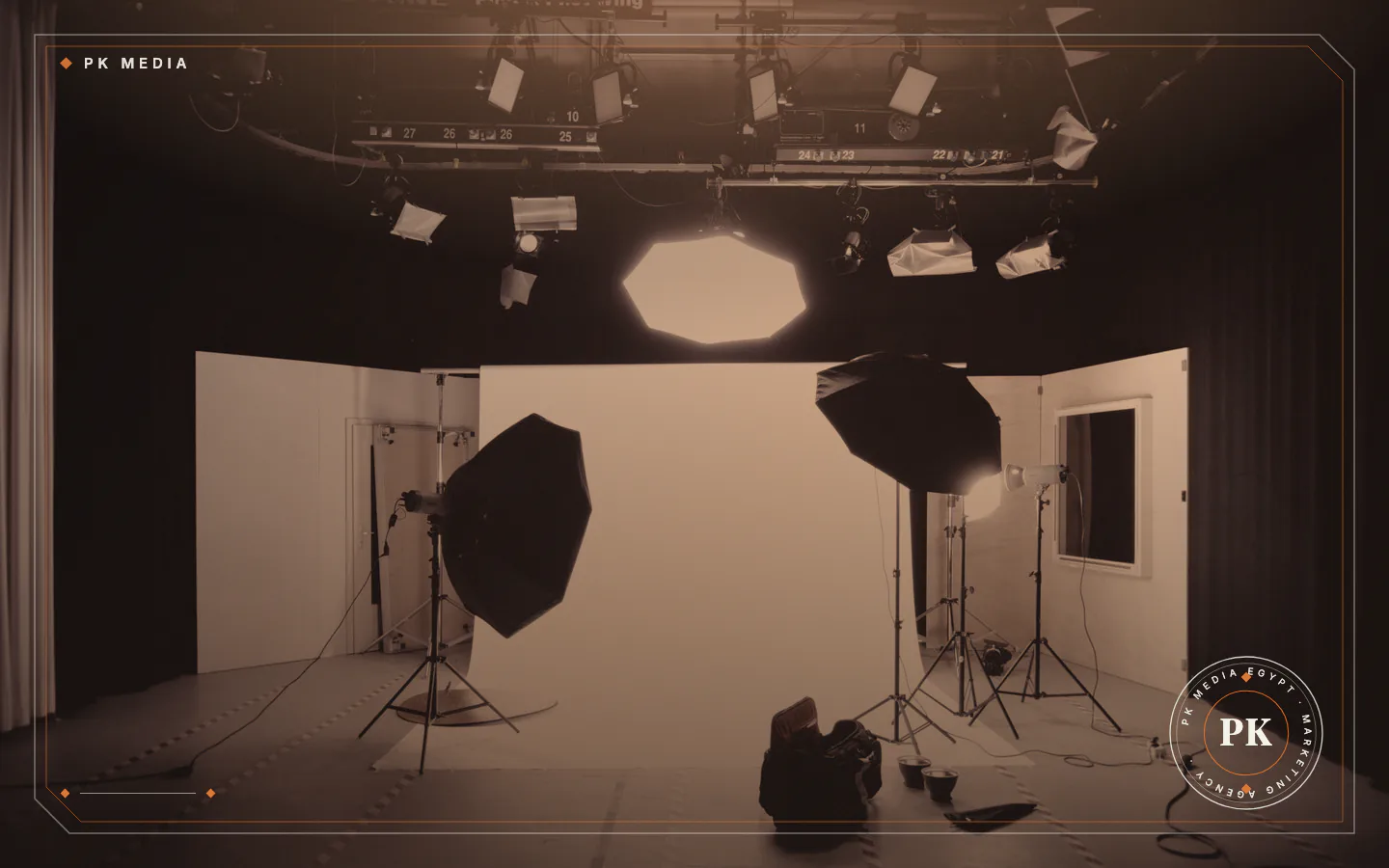
The number of hand-offs matters in practice. PK Media also runs PK Studio in Dokki, with chroma backdrops, cameras and lighting that clients can rent or have PK Media produce in, so a project that needs filming and a studio can stay with one team.
How to judge a showreel and what to ask before you sign
The showreel and the written scope can tell you more than a pitch. Start with the samples, then move to the questions.
What to look for in a showreel
Watch with your own goal in mind:
- Relevance: samples with a similar goal, sector and format, not only beautiful shots.
- Story: does each sample have one clear message and a reason for every scene?
- Sound: clear voices and balanced music are, in our view, a useful sign of care.
- Consistency: the quality holds across several samples and not in one highlight.
- Role: ask which parts of each sample the people you will work with actually made.
- Full videos: ask to see complete videos and not only the highlight reel.
A portfolio shows range, so ask any producer for samples you can verify. Some producers cannot name their clients, so ask what they can show and explain.

Questions to ask
Put these to every producer, in writing:
- Who will shoot and edit my video, and will they be there on every shoot day?
- What does the scope include: shoot days, versions, formats and feedback rounds?
- What is not included, such as music licences, voice-over, location fees or travel?
- How are changes handled after a stage is approved?
- What is the schedule, and what do you need from us and by when?
- What happens if part of the shoot has to be repeated?
What you should receive and have in writing
Settle the deliverables before the shoot, not after the final cut:
- The final video in each agreed format and ratio, such as widescreen and vertical.
- Subtitles as separate files, and a thumbnail image.
- Usage rights: where, for how long and in which media the video may be used.
- Licences for music and any stock footage, and releases from people on screen. YouTube scans every upload with Content ID, and a match with protected music produces a claim on the video.
- Whether raw footage and project files are included or sold separately.
- The scope, schedule, payment stages and number of revisions.
Frequently asked questions about promotional videos
These are the questions owners ask before they brief a producer.
How long should a promotional video be?
There is no fixed length. It should run as long as it takes to deliver one message and no longer. A short ad cut, a website introduction and a sales-meeting video can each have a different length, so decide the channel first and make shorter versions of the main film.
Do I need a script before I contact a production company?
No. You need a clear goal, the audience, the one message and where the video will play. A good producer turns that brief into a script and storyboard for you to approve. If you already have a draft script, share it, but expect it to be reworked for speaking and screen time.
Who owns the footage after the project?
The written agreement decides, so ask before you sign. Some agreements give a licence to use the final video in agreed places for an agreed period, while raw footage and project files stay with the producer unless they are listed. Music, stock clips and people on screen may carry their own conditions.
Can one shoot produce a main film and short clips for social media?
Often yes, if it is planned in advance. The shots can be framed for widescreen and vertical versions, and the edit can produce a longer film plus shorter cut-downs. Tell the producer every channel and format at the start, because fixing the framing after the shoot is harder and can mean filming again.
Your next step: write the one-page brief
Write the goal, the audience, the one message and the channel on a single page, then send it to the producers you want to compare. To talk through a promotional video for your company, contact PK Media.
Sources
- W3C Web Accessibility Initiative, read 19 November 2026
- YouTube Help, read 19 November 2026
- YouTube Help, read 19 November 2026
- YouTube Help, read 19 November 2026